Achievement Unlocked: Praetorianismus Americanus
Like a player grinding through levels to unlock new abilities, in less than a year into his second term Trump has apparently succeeded in turning the most formidable military on earth into his own personal instrument of lethal power.

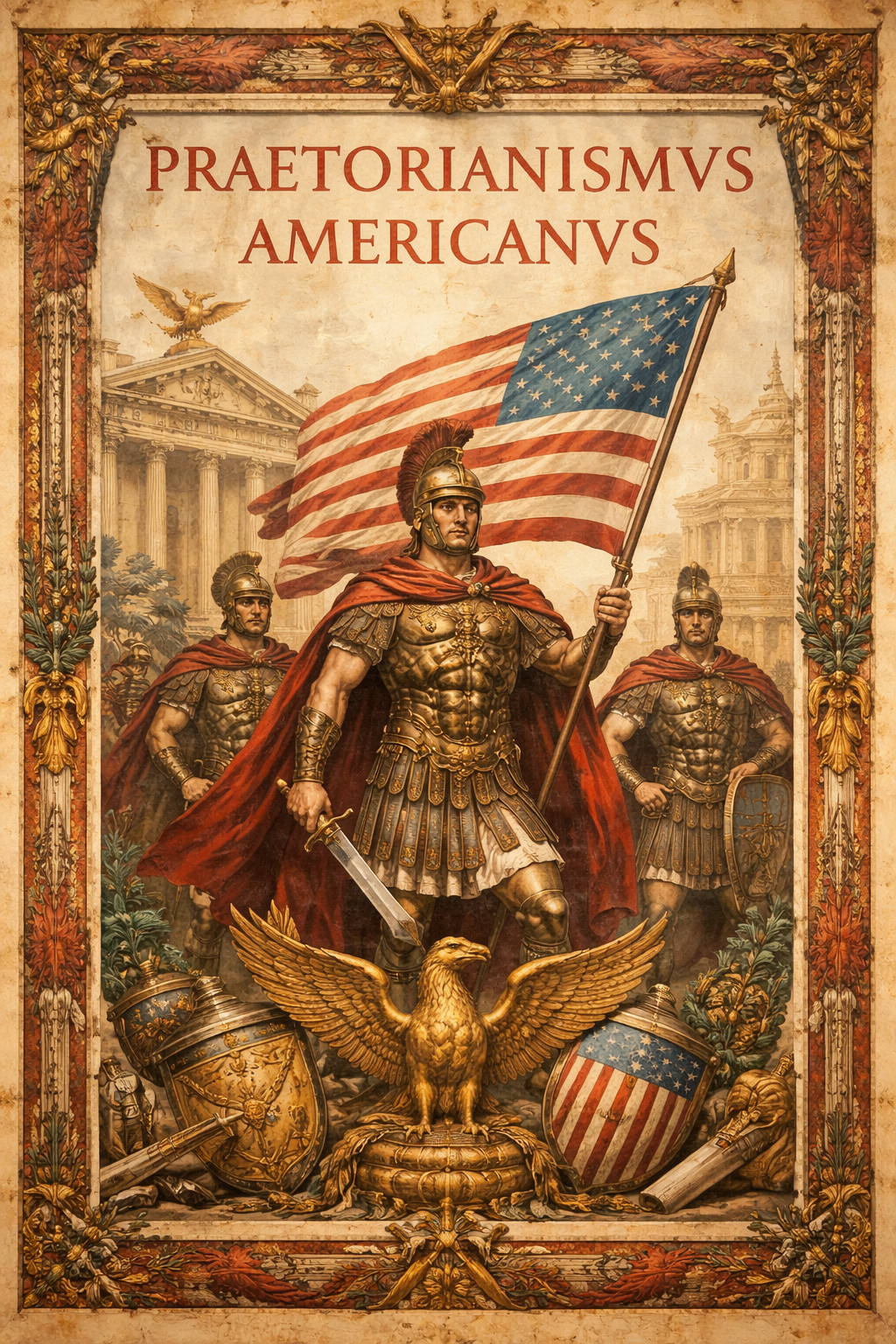
The Trump administration's systematic purge of senior military leadership marks a dangerous inflection point in American civil-military relations. Like a player grinding through levels to unlock new abilities, in less than a year into his second term Trump has apparently succeeded in turning the most formidable military on earth into his own personal instrument of lethal power. Methodically removing obstacles to direct presidential control over the armed forces and replacing principled officers with loyalists willing to execute orders of dubious legality, Trump gained full, unquestioned control of the American military--as his attack on Venezuela and his "might makes right" rendition of Nicolás Maduro have forcefully demonstrated.
The achievement? An emerging praetorian guard more accountable to one man than to the Constitution.
History students recognize this pattern. Rome's Republic didn't collapse in a day—it eroded through incremental subordination of military institutions to personal loyalty until Julius Caesar could cross the Rubicon with legions devoted to him rather than the Senate. Augustus formalized that transformation by creating the actual Praetorian Guard, elite troops stationed in Rome whose primary loyalty was to the Emperor, not the Roman state. Like a veteran gamer, Trump is speedrunning the same achievement tree. How long will it be before he tries to use his newly personalized military machine against the rest of us?
The Roman Precedent: From Marius to the Principate
The Roman Republic's military transformation began not with obvious tyranny but with seemingly reasonable reforms. As Professor Edward J. Watts chronicles in his superb Mortal Republic: How Rome Fell Into Tyranny, the Republic was facing military threats on multiple fronts in the late 2nd century B.C. To meet that challenge, Consul Gaius Marius broke with Roman tradition and opened military service to the landless poor and extended service terms. Soldiers who once served brief campaigns and returned to their farms became long-term professionals dependent on their commanders for pay, plunder, and—crucially—post-service land grants.
This created a revolutionary shift in loyalty. Soldiers no longer fought primarily for Rome; they fought for the general who would reward them. Marius' successor, Lucius Cornelius Sulla, marched on Rome itself with legions loyal to him personally. Pompey's veterans demanded land distributions that the Senate couldn't deny. Caesar's legions followed him across the Rubicon because their fortunes were tied to his success, not the Republic's laws.
The final transformation came with Augustus, who understood that controlling Rome required controlling military loyalty. The Praetorian Guard—elite soldiers stationed in Rome itself, paid substantially more than regular legionaries, and personally selected for loyalty—became the institutional embodiment of praetorianism. They weren't there to defend Rome from external enemies. They were there to defend the Emperor from internal threats, including the theoretical check of senatorial authority.
The pattern is remarkably consistent: changes in military recruitment and leadership create personal dependency, personal dependency enables commanders to pursue extralegal action, successful extralegal action rewards and reinforces personal loyalty, until finally the military becomes the tool of individual will rather than constitutional structure. It is that historical pattern that we are witnessing now in real time under Trump.
The First Term: Institutional Resistance as Speed Bump
Trump's first term demonstrated both his praetorian instincts and the institutional resistance that then constrained them. The George Floyd protests in summer 2020 crystallized the conflict. Trump demanded active-duty military forces be deployed to suppress protests in American cities, invoking the Insurrection Act and declaring himself "your president of law and order." His June 1, 2020 photo op at St. John's Church—preceded by federal forces violently clearing peaceful protesters from Lafayette Square—signaled his intention to militarize domestic protest response.
Secretary of Defense Mark Esper became the institutional bulwark against this impulse. In a June 3, 2020 press conference, Esper publicly opposed invoking the Insurrection Act, stating: "I say this not only as secretary of defense, but also as a former soldier and a former member of the National Guard: The option to use active-duty forces in a law enforcement role should only be used as a matter of last resort and only in the most urgent and dire of situations. We are not in one of those situations now."
Chairman of the Joint Chiefs General Mark Milley apologized for participating in the Lafayette Square photo op, saying: "I should not have been there. My presence in that moment and in that environment created a perception of the military involved in domestic politics." He emphasized that the military swears an oath to the Constitution, not to an individual leader.
These acts of institutional resistance carried professional costs. Trump fired Esper via Twitter on November 9, 2020, immediately after the election but before inauguration. The message was clear: pushback against presidential prerogatives, even on constitutional grounds, meant termination.
This resistance wasn't systematic opposition—it was institutional friction. Career officials operating within their understood roles as advisors and implementers of lawful orders. They provided the speed bump that slowed Trump's most impulsive demands, creating space for political or legal challenges to materialize.
But institutional friction only works when institutions retain independence. Trump learned from his first term that legal constraints and professional military judgment are obstacles to be removed, not features to be preserved.
The 2025 Purge: Removing All Obstacles
Trump's second term has been marked by determined efforts to eliminate the guardrails that he encountered the first time around. Within days of his January 20, 2025, inauguration, the systematic purge of flag rank officers began. The scale and speed are unprecedented in American history.
The Immediate Post-Inauguration Purge:
On January 20, 2025, Trump signed an executive order creating a "warrior board" to review and recommend removal of senior military officers deemed unsuitable for leadership. The criteria emphasized "lethality" and loyalty rather than traditional professional qualifications.
Admiral Linda Fagan, the first woman to lead the Coast Guard, was removed from her position on January 21, 2025. The official rationale cited border security failures, recruiting shortfalls, and her handling of Operation Fouled Anchor, but observers noted her removal followed her testimony before Congress defending diversity initiatives and existing Coast Guard policies that Trump had criticized.
General CQ Brown, Chairman of the Joint Chiefs of Staff, faced immediate pressure from Trump officials questioning his leadership. He was subsequently replaced by Air Force General Dan Caine.
Indeed, the list of senior officers removed from key positions or who've retired early--as commanders or as a given military service's top lawyer--is as striking as it is ominous:
- Gen. Charles Q. Brown Jr.: Fired as Chairman of the Joint Chiefs of Staff.
- Adm. Lisa Franchetti: Fired as the Chief of Naval Operations (CNO).
- Adm. Linda Fagan: Fired as the Commandant of the Coast Guard.
- Gen. James Slife: Fired as the Air Force Vice Chief of Staff.
- Gen. David Allvin: Announced early retirement as Air Force Chief of Staff amid pressure.
- Gen. Timothy Haugh: Fired as Director of the National Security Agency (NSA).
- Vice Adm. Shoshana Chatfield: Fired from her role as the U.S. military representative to the NATO military committee.
- Lt. Gen. Charles Plummer: Fired as the Air Force Judge Advocate General.
- Lt. Gen. Joe Berger: Fired as the Army Judge Advocate General.
- Vice Adm. Nancy Lacore: Fired as Chief of U.S. Navy Reserve.
- Rear Adm. Milton Sands: Fired as Commander of U.S. Navy Special Warfare Command.
- Adm Alvin Holsey: Resigned over disputes with Hegseth and Trump regarding lethal strikes on alleged narco-trafficking vessels.
And it's not just the active duty military that Trump is attempting to bend to his personal will. It's America's modern militia, the National Guard.
The National Guard Deployment Crisis:
The deployment of National Guard troops for immigration enforcement operations sparked the most significant institutional crisis. Multiple flag officers raised concerns about the legality of using military personnel for domestic law enforcement under Posse Comitatus restrictions.
The military leadership overseeing these deployments has remained in place precisely because officers learned the lesson from earlier firings: raise concerns too forcefully, and you're gone. General Gregory Guillot, who commands NORTHCOM and oversees National Guard deployments in American cities, carefully calibrated his December 2025 congressional testimony—gently noting he saw no "enemy from within" while simultaneously confirming his willingness to conduct attacks on designated terrorist organizations within U.S. territory if ordered. This is how praetorianism works: not through universal enthusiasm, but through the survival of officers who understand which objections will be tolerated and which will end careers.
The Systematic Restructuring:
Beyond individual removals, Trump has restructured military leadership to centralize control:
- Creation of loyalty review boards to evaluate flag officers' "commitment to lethality" and alignment with administration priorities
- Trump personally interviewing ALL four-star promotion candidates
- Expedited promotion processes for officers identified as administration allies
- Removal of military attorneys who raised concerns about proposed operations' legality
The Emerging Pattern:
What distinguishes the 2025 purge from normal civil-military tensions is its systematic nature. Trump isn't removing individual officers who fail at their jobs—he's restructuring the entire flag rank officer corps to eliminate institutional independence. The message to mid-level officers is unmistakable: advancement requires demonstrated loyalty to the President personally, not professional military judgment or constitutional fidelity.
The American Acceleration: Panama to Venezuela
Trump's approach to Venezuela bears striking similarities to Operation Just Cause, the 1989 invasion of Panama that removed Manuel Noriega. Both operations involved a strongman leader who had become an irritant to Washington, allegations of federal law violations (alleged or actual) as casus belli, and the installation of a preferred replacement regime. But there's a crucial difference that maps directly onto the Roman civil-military transformation I've discussed.
In 1989, the U.S.'s military leadership—however complicit in enabling the operation—still maintained institutional independence. Officers could privately question the invasion's necessity while publicly executing orders. Chairman Colin Powell and SOUTHCOM commander Maxwell Thurman represented professional military judgment, not personal loyalty to George H.W. Bush. Powell and Thurman were the American equivalent of Roman officers of the mid-Republic: willing to conduct questionable wars but still oriented toward institutional rather than personal authority.
Trump's Venezuela gambit operates under Augustan rules. The officers now commanding Southern Command and overseeing potential operations aren't there primarily because of their strategic acumen or decades of regional expertise. They're there because they survived loyalty tests that had nothing to do with military competence--a personal loyalty test that former SOUTHCOM commander Admiral Alvin Holsey apparently rejected. Like Praetorian prefects, they hold their positions through demonstrated personal allegiance.
The Structural Transformation: Building the Praetorian System
What makes this praetorianism is not simply bad decision-making by compliant officers. It's the systematic destruction of institutional independence that might constrain executive action. The military's professional ethic—the understanding that officers serve the Constitution and the law, not the personal interests of the commander-in-chief—has been under assault since Trump's first term. His second term has accelerated that assault, a threat that could lead to institutional collapse.
The Roman historical parallel to our American situation is extremely apt. The Roman Republic's military didn't suddenly become praetorian. It transformed through structural changes that redirected loyalty from institutions to individuals:
Merit was subordinated to loyalty. In early Rome, military commanders were magistrates (i.e., consuls) elected by the people and accountable to the Senate. By Caesar's time, successful generals accumulated personal power through their legions' loyalty. Trump's purge creates the same dynamic: officers advance not primarily through professional competence but through demonstrated willingness to execute Trump's orders--including ones of questionable or no legality. This creates selection pressure throughout the officer corps: ambitious colonels and junior generals learn that career advancement requires enthusiastic compliance with executive preferences, legal or not.
The contrast between Esper's fate and his successor's trajectory illustrates this perfectly. Esper's professional judgment—grounded in his own military service and constitutional understanding—cost him his position. His replacement and the subsequent Trump Secretary of Defense nominees understood the lesson: successful service means enabling presidential will, not constraining it through institutional norms or legal analysis.
Institutional memory was lost. Rome's citizen-soldier tradition maintained corporate knowledge about republican governance. Professional armies loyal to commanders lost that institutional connection. The purged flag officers represented decades of accumulated expertise about what works militarily, what the law permits, and how to maintain civil-military relations. Their replacements lack the institutional standing to push back against bad ideas.
General Milley's departure from the Joint Chiefs chairmanship marked the end of an era. His willingness to apologize for the Lafayette Square incident and his public statements about the military's oath to the Constitution represented institutional memory about proper civil-military relations. His successor was clearly selected for his loyalty to Trump, not his experience or competence.
Legal constraints became suggestions. Augustus maintained the fiction that he was merely "first citizen" operating within republican forms, but everyone understood that the Praetorian Guard's presence in Rome meant the law was whatever the Emperor said it was. When Trump's military lawyers raise concerns about proposed operations, they're replaced or overruled. The new normal is finding legal theories to justify desired outcomes, not providing independent analysis of what the law or the Constitution permits.
The National Guard deployments illustrate this perfectly. Career military lawyers raised legitimate Posse Comitatus concerns. Rather than address these concerns through proper legal channels, the administration simply removed the officers raising them and found lawyers willing to construct permissive legal theories. The law didn't change—but its enforcement and interpretation became subordinate to political requirements.
Legislative oversight was evaded. The Roman Senate retained theoretical authority over military matters long after losing practical control. With military leadership willing to stretch legal authorities and mischaracterize operations, Congress loses its informational advantage. Committee hearings become exercises in obfuscation rather than accountability—Senatorial theater while the Emperor's guard ensures his will prevails.
This is how republics die—not through dramatic coups but through gradual subordination of institutional independence to executive will. Rome's transformation took a century; Trump is attempting it in months.
The Praetorian Logic: Self-Reinforcing Decay
The historical irony is that Rome's Praetorian Guard, created to protect the Emperor, eventually became kingmakers themselves. They assassinated Caligula. They auctioned the imperial throne to the highest bidder after murdering Pertinax. They elevated and disposed of emperors based on their own institutional interests. The logic of praetorianism is that personal loyalty, once established as the basis for military power, doesn't stay loyal to the person who created the system.
Trump has unlocked praetorian achievement, but the game isn't over—and history suggests he may not control the next levels. Each successful operation—each time compliant military leadership enables legally dubious presidential action without consequences—unlocks the next stage. Venezuela would normalize regime change operations launched on executive whim. Success there would encourage interventions elsewhere. Failure would be blamed on insufficient loyalty, triggering another purge.
But the praetorian dynamic, once established, is self-reinforcing in ways that transcend Trump himself. Officers who might privately question orders understand that dissent means career death. Those who publicly comply are rewarded with advancement, creating a feedback loop of increasing subordination. The military becomes not a check on executive power but its instrument—until the instrument realizes it has its own interests and its own power base.
Rome discovered this the hard way. Once the Praetorian Guard understood that emperors depended on their loyalty, they could make demands: higher pay, larger bonuses, purges of rivals, even selection of successors. The institutional decay that began with Marius's reforms and accelerated through Caesar's personal legions culminated in military commanders treating the Empire itself as spoils to be distributed.
Trump is creating officers whose loyalty is to him personally—but what he's actually creating is a class of military leaders who understand that political loyalty, not professional competence, is the path to power. When Trump leaves office (one way or another), those officers will remain, and they'll have learned that the way to advance is through political engagement, personal networks, and willingness to serve whoever controls patronage.
The Venezuela Test Case: Caesar's Rubicon
Venezuela represents the ultimate achievement unlock for Trump's praetorian model, and the parallel to Caesar's Gallic campaigns is more direct than it first appears. Caesar spent years in Gaul accumulating personal military power, enriching his soldiers with plunder, and creating facts on the ground that Rome's institutions couldn't effectively challenge. Trump's mechanism is more bureaucratized but equally corrupting: officers who participated in the Venezuela operation stand to receive combat medals that dramatically enhance their promotion prospects—and promotions mean higher pay for the rest of their careers. When Defense Secretary Hegseth boasts of gaining 'additional wealth and resources without spending American blood,' he's describing a model where military force bypasses diplomatic and legal constraint to secure national enrichment. The officers who enable this—selected after loyalty purges that removed legal objectors—have direct financial stakes in its success.
When the Roman Senate finally demanded Caesar disband his legions and return to face charges, his soldiers' wealth and status depended on him personally. Trump's officers face a similar calculation: their medals, their promotions, and their legal protection all flow from participation in operations that challenged constitutional authority.
Unlike domestic deployments where legal constraints still theoretically apply and federal courts can intervene, foreign military operations offer maximum executive discretion with minimum oversight. The War Powers Resolution's 60-day window provides ample time to create facts on the ground. International law is easily dismissed. And the new officer corps won't ask uncomfortable questions about authorization, proportionality, or exit strategy.
The parallels to Panama are instructive precisely because they reveal how institutional decay proceeds incrementally. In 1989, at least some institutional processes still functioned: military lawyers vetted the legal framework, intelligence assessments were debated, operational planning involved professional military judgment rather than political calculation. But when Noriega challenged the invasion's legality in federal court, judges refused to examine it—declaring such questions 'constitutionally committed to the executive' and 'beyond judicial review.' The prosecution could proceed; the question of whether constitutional limits had been violated could not be adjudicated.
This was the critical precedent: courts would validate executive military action by processing its results while refusing to constrain the action itself. Venezuela differs only in degree: now even the internal military legal review process has been gutted by firing JAGs who raised concerns. The courts will almost certainly do in Maduro's case what they did in Noriega's—uphold jurisdiction while declining to examine legality. But there's no longer any institutional check beforehand either.
The 2025 Venezuela operation lacked those guardrails entirely. Trump has spent his presidency since January 20th removing anyone who might provide independent military advice or legal constraints. The officers who remain understand that their role is to enable, not question. When Trump decides Maduro must go—whether for alleged strategic reasons, domestic political legal advantage, or simple personal pique—the military will provide options for regime change, not sober analysis of whether regime change serves American interests.
This is the Rubicon moment playing out in slow motion. Caesar crossed with legions he knew would follow him into civil war. Trump is assembling a military leadership that would follow him into whatever adventure he chooses, constitutional authorization be damned. The removal of Esper and Milley was akin to the moment Caesar dismissed the Senate's final recall—when resistance became impossible. Their successors, selected for loyalty after purging legal objectors, represent the legions on the far bank: the crossing complete, awaiting only the order to march on Rome.
The Constitutional Question: Can Republican Forms Survive?
This matters beyond Venezuela or any single operation. A praetorian military undermines constitutional government itself. When armed forces answer to personal loyalty rather than law, when officers enable rather than constrain executive action, when institutional independence is destroyed in favor of compliance, the military becomes a threat to rather than defender of constitutional order.
The Founders understood this danger precisely because they studied Rome's fall. They created civilian control of the military to prevent praetorianism, structuring that control through multiple competing institutions: congressional appropriations and authorizations, Senate confirmation of officers, courts-martial separate from executive command, and officers whose oath was to the Constitution rather than the President. Civilian control was never meant to be unlimited personal control. It was control through law, through institutional checks, through officers who understood their oath as imposing legal constraints on executive action.
Trump has hacked that system exactly as Augustus hacked Roman Republican forms. He's discovered that by systematically removing officers who take their constitutional oath seriously and replacing them with loyalists, he can convert civilian control into personal control. The military remains technically subordinate to civilian authority, but that authority is now embodied in one man rather than constitutional structure. The forms persist—just as the Roman Senate persisted for centuries after losing real power—but the substance has transformed.
The Roman Republic's citizens didn't wake up one day to discover they lived in an empire. They experienced decades of gradual transformation: military reforms that seemed practical, commanders who technically operated within legal frameworks while accumulating personal power, legislative bodies that retained formal authority while losing practical control, and ultimately an Emperor who maintained republican forms while exercising monarchical power.
Augustus's genius was understanding that he didn't need to abolish the Republic—he just needed to redirect its institutions' loyalty from abstract constitutional principles to concrete personal relationships. The Senate still met. Magistrates were still elected. Laws were still passed. But the Praetorian Guard in Rome ensured that all of this happened within boundaries acceptable to the Emperor.
Esper and Milley understood this danger. Their resistance wasn't insubordination—it was the proper function of military leaders in a constitutional republic. They provided the institutional friction that republican government requires. Their removal and replacement with compliant successors represents the conversion of that friction into lubrication for executive will.
The Sword Pointed Inward
Venezuela demonstrates that the structural transformation is complete. But the real target was never Caracas—it was Chicago, Portland, and every other American city where political opposition might manifest. Trump has already deployed thousands of troops to Democratic-led cities throughout 2025, claiming authority under obscure statutory provisions while federal courts ruled the deployments violated the Posse Comitatus Act. When a Supreme Court ruling blocked his attempted takeover of Chicago's National Guard in December, the 6-3 decision appeared to establish some judicial check on presidential authority. But the opinion was deliberately narrow, and Trump's response made clear he understood its limits: "We have an Insurrection Act for a reason. If I had to enact it, I'd do that. If courts were holding us up, or governors or mayors were holding us up, sure I do that."
The Supreme Court's Chicago ruling addressed only Section 12406—an obscure 1903 statute governing National Guard federalization. The Court found the administration "failed to identify a source of authority that would allow the military to execute the laws in Illinois." But the opinion carefully avoided the questions that matter most: whether courts can review presidential determinations under the Insurrection Act, how much deference such review requires, and whether Martin v. Mott—an 1827 case holding that the president's determination of military necessity is "conclusive upon all other persons"—bars judicial review entirely.
Justice Kavanaugh's concurrence flagged these gaps explicitly, worrying that the majority's reasoning "could lead to potentially significant implications for future crises" and might "bind the court's hands in potentially unforeseen ways." His carefully hedged language suggests a fifth vote that might not hold on the Insurrection Act.
The distinction matters because the Insurrection Act operates in a different legal universe than Section 12406. Once invoked, it explicitly exempts military forces from Posse Comitatus restrictions and allows the president to deploy active-duty troops for domestic law enforcement. The statute uses permissive language—allowing deployment whenever laws are "impracticable to enforce"—that grants far broader discretion than Section 12406's requirement to show inability to execute laws with regular forces. The Trump administration's legal briefs argued that Martin v. Mott establishes presidential determinations as unreviewable, or at minimum entitled to "extraordinary deference" akin to rational-basis review where courts uphold any action with a "plausible basis." Legal scholars note this creates a framework where "the Insurrection Act is based on highly permissive standards for action and provides neither a role for Congress nor a basis for serious judicial review."
The administration has already demonstrated it will label virtually any opposition as meeting the Insurrection Act's triggers. At Quantico in September, Trump told over 800 generals and admirals that cities should serve as "training grounds for our military," describing America as waging "a war from within" against enemies who "don't wear uniforms." His deputy chief of staff Stephen Miller labeled court rulings against the administration "legal insurrection" and characterized Democratic governors' refusal to cooperate as "organized terrorist attack on the federal government." Anti-ICE protests are insurrection. Judicial orders blocking deployments are insurrection. Political opposition itself is insurrection. This elastic definition, combined with an Insurrection Act that a Supreme Court majority may rule is beyond judicial review, creates the framework for military deployment against any significant manifestation of political resistance.
The pieces are positioned precisely as they were before Venezuela. The systematic removal of military lawyers who raised Posse Comitatus concerns—firing Berger for questioning National Guard deployments, eliminating internal legal review that might constrain executive action—serves double duty for domestic operations. Officers who participated in Venezuela now carry combat medals that enhance promotion prospects throughout their careers, creating career and personal financial stakes in continued operations that test legal boundaries. Senior military leadership has been selected for loyalty after purging those who resisted Trump's 2020 impulse to deploy troops against protesters. Esper and Milley, who blocked domestic military deployment then, are gone. Their successors passed the loyalty test and proved their reliability in Caracas.
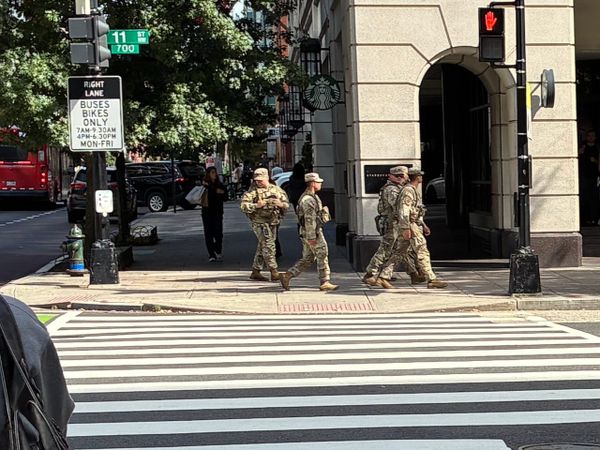
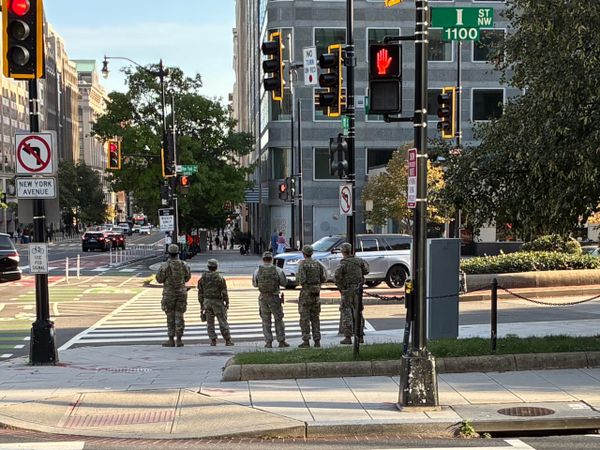
Trump has already sent Marines to Los Angeles, federalized California's National Guard over Governor Newsom's objections, and maintained troops in Washington, D.C. for months. These deployments violated the Posse Comitatus Act according to some federal judges, but the violations continued while appeals wound through courts. The Supreme Court's Chicago ruling stopped one deployment under one statute, but left the Insurrection Act—the far more powerful authority—in legal limbo. The Court's silence on that question is itself ominous.
When Trump threatens to invoke the Act "if courts were holding us up," he's not making an empty threat. He's identifying the weapon that federal courts have been carefully avoiding adjudicating, the one legal authority where Martin v. Mott's 1827 declaration that presidential determinations are "conclusive" might actually mean what the administration claims it means.
Caesar's legions didn't march on Rome immediately after conquering Gaul. They trained, they enriched themselves with plunder and promotions, they developed personal loyalty to their commander, and they watched the Senate's inability to constrain his accumulating power. Only when Caesar judged the moment right—when institutional resistance had been sufficiently degraded, when his soldiers' fortunes were tied to his success, when the legal mechanisms that might have stopped him had been compromised or their limits tested—did he cross the Rubicon.
Trump has already sent his legions into American cities for "training." He will likely enrich those involved with the Venezuela operation with medals and promotions. He has systematically removed every internal institutional check that might have restrained him. He has tested the outer boundaries of Section 12406 and lost, but in losing discovered exactly which authority the courts have been avoiding: the Insurrection Act itself. The question is not whether the sword will be pointed inward, but when he invokes the one statute that federal courts may be unable or unwilling to constrain—and whether any institution will remain capable of stopping it when he does.
The Next Level: What Happens After Achievement Unlock?
Achievement unlocked, indeed. The question is what happens at the next level—and whether American constitutional government can survive it.
History offers uncomfortable answers. Rome never reversed its praetorian transformation. Once military loyalty shifted from institutions to individuals, once the forms of republicanism became separated from their substance, once a professional military class emerged whose interests diverged from civilian constitutional governance, the Republic was functionally dead even when it remained nominally alive.
The optimistic reading is that Rome's transformation took a century and involved fundamental social and economic changes that America hasn't experienced. The pessimistic reading is that modern technology, communications, and organizational capacity allow authoritarian consolidation to happen much faster than it did in the ancient world.
What we're witnessing is the acceleration of patterns that destroyed the Roman Republic compressed into months rather than decades. Trump hasn't created a literal Praetorian Guard—yet. But he's created the essential precondition: a military leadership class whose advancement depends on personal loyalty rather than institutional service, whose understanding of "civilian control" means obedience to the President rather than the Constitution, and whose willingness to execute legally dubious orders has been selected for through systematic purges.
The Roman precedent suggests this is a one-way transformation. Once praetorianism becomes embedded in military culture, once officers learn that their careers depend on political loyalty, once institutional checks erode to the point where they're merely theatrical, restoration becomes nearly impossible.
Future presidents—whether Trump's successors or his rivals—will inherit a military leadership selected for compliance, not independence. They'll face the choice of either accepting that praetorian dynamic or attempting another purge to install their own loyalists, which only reinforces the underlying problem.
Rome tried periodic reforms. Emperors occasionally attempted to restore military professionalism, limit the Praetorian Guard's power, or re-instill institutional loyalty. These reforms invariably failed because the structural incentives remained unchanged. Officers who rose through personal loyalty networks couldn't suddenly be transformed into institutionalists. The Praetorian Guard, once created, couldn't be wished away without facing the force it represented.
The game continues, and Trump has unlocked the praetorian achievement. But like any good game designer, history has ensured that unlocking this achievement doesn't end the game—it just makes the next levels harder and the ultimate victory condition more elusive. Caesar crossed the Rubicon and won. Augustus consolidated the transformation and died peacefully. But their successors faced assassination, civil war, and eventual collapse as the praetorian logic they'd established consumed the system they'd created.
The American achievement tree remains incomplete. We don't yet know if Trump's praetorian transformation will face effective resistance, if institutional checks will reassert themselves, or if we're simply at an earlier stage of Rome's decline than we'd like to admit. But the parallel is clear enough: once you unlock praetorianism, you can't simply reload an earlier save. The game changes permanently, and history suggests that republics that reach this level rarely make it to the ending where constitutional government survives.
Esper's firing was the tutorial level—teaching Trump that institutional resistance could be overcome through personnel actions. The 2025 purge is the main campaign—systematically removing all obstacles to personal control. Venezuela would be the final boss—demonstrating that a praetorian military will execute whatever orders Trump gives, regardless of legal or constitutional constraints.
And after that? History suggests the endgame involves the Praetorian Guard realizing they're the ones with the real power.
REMINDER: You can get 30% off my new book about past episodes of unconstitutional surveillance and political repression, the Triumph of Fear, by going directly to the Georgetown University Press website and using the code TGUF...and this code can be used by anybody, so spread the word and thanks for being a Sentinel subscriber!